
Cooking Outdoors: Rocket Stoves, a Backyard Smoker, and the RV Kitchen In Between
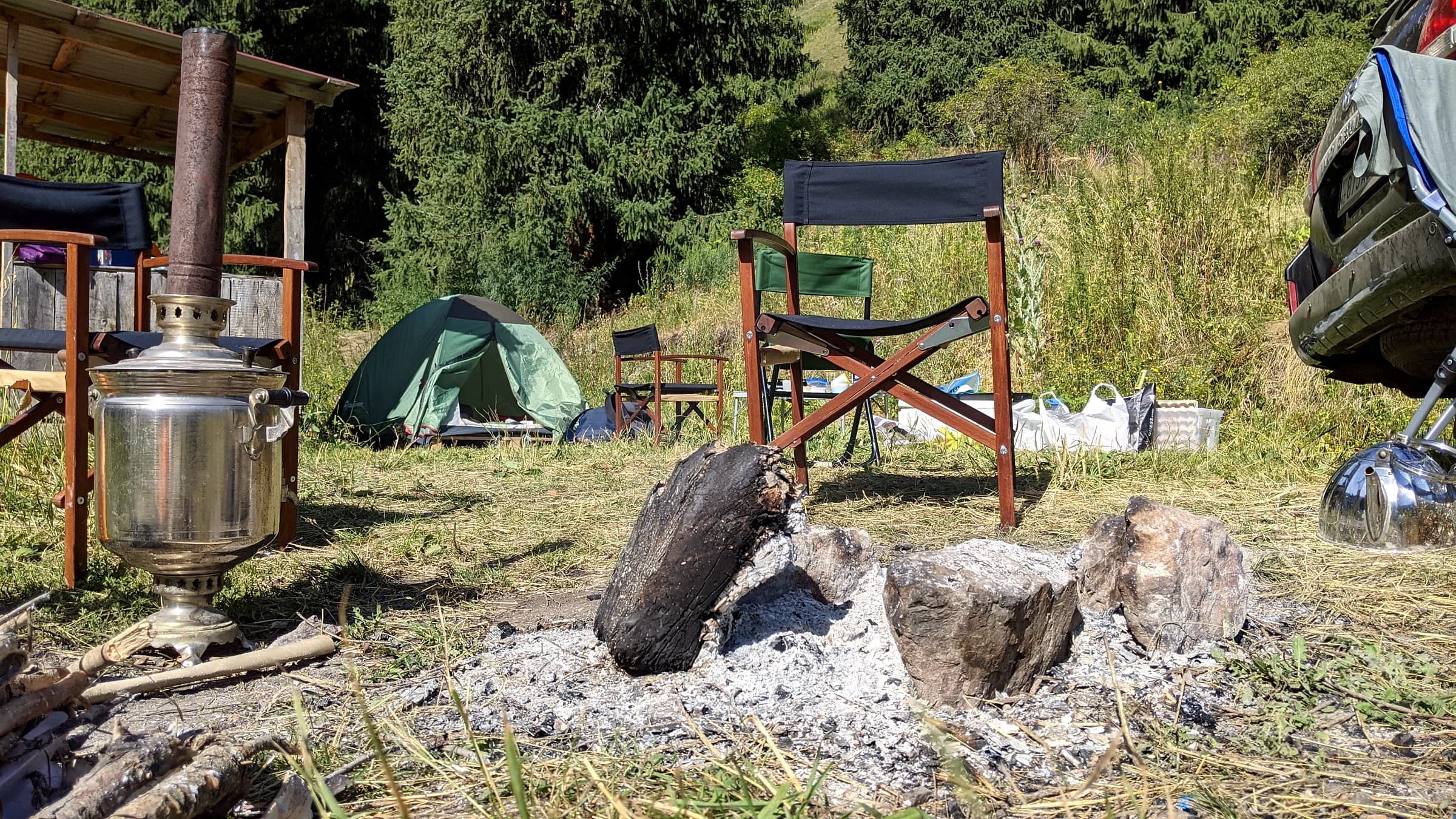
Propane stoves cover most of our meals on a trip, but they're not the only way we cook outdoors. Between a wood-fired rocket stove, a portable Masterbuilt smoker, and however many nights we've spent cooking in the galley of a rented RV, we've ended up with a rough sense of which cooking method actually fits which kind of trip.
The wood-fired rocket stove: slow, but almost free to run
A rocket stove burns small pieces of wood and kindling instead of gas, and what it lacks in convenience it makes up for in how little it costs to run. No fuel to buy, no canister to run out of, just whatever dry wood you can find or bring. We've used ours for longer-simmer dishes, rice and stews mostly, where the slower, more variable heat isn't a problem the way it would be for something like eggs that need consistent heat.
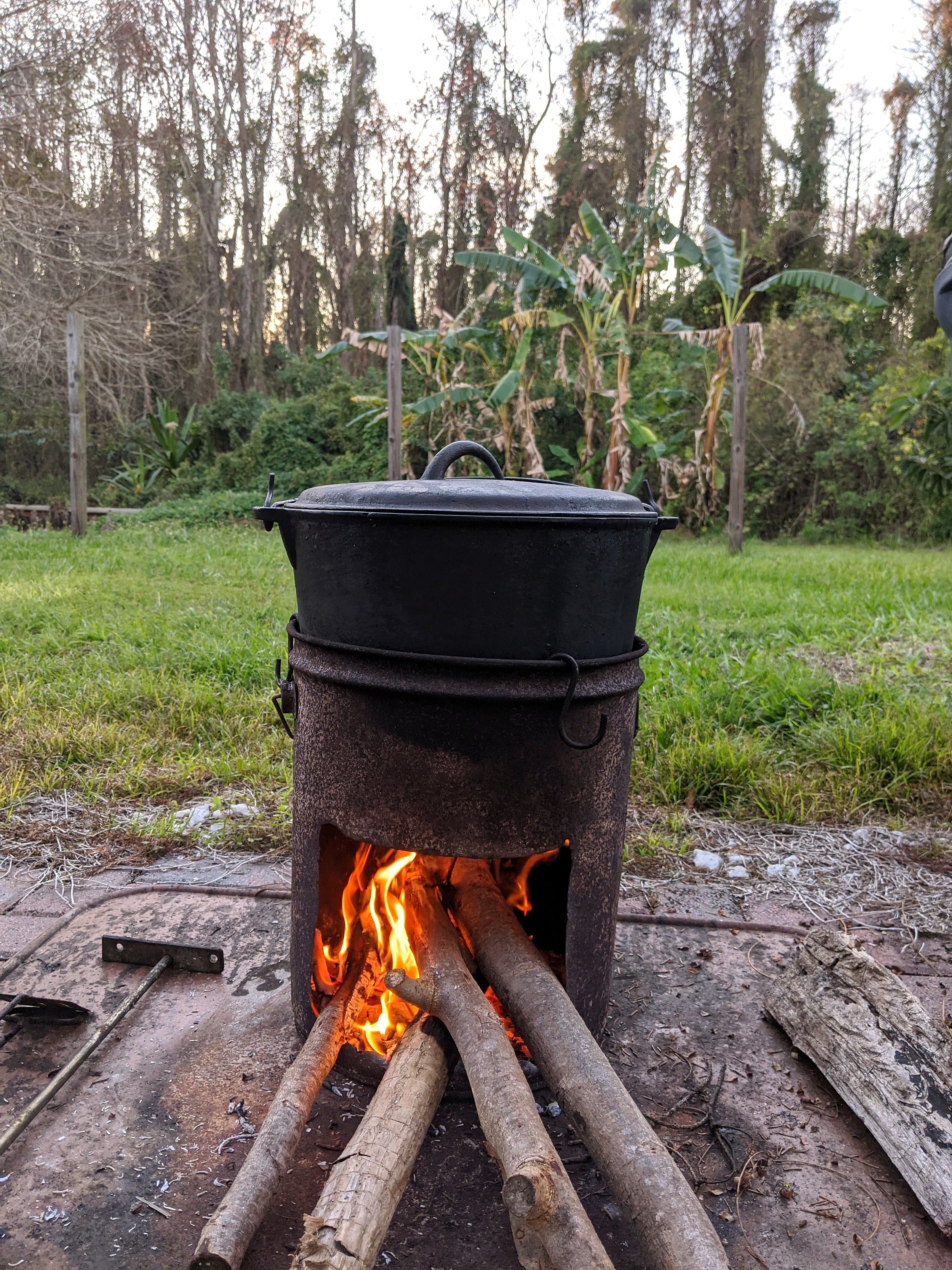
A rocket stove running on scrap wood. Slower than propane, but it never runs out of fuel.
The tradeoff is attention. A propane stove holds a flame at a set level until you turn it off. A rocket stove needs someone feeding it wood and adjusting airflow the whole time it's running, which makes it a worse choice for a quick breakfast and a better one for a dish you're going to be standing near anyway.
A portable smoker changes what camp food means
Our Masterbuilt smoker is a square propane-fed smoker, small enough to travel but real enough to actually smoke meat low and slow instead of just grilling it. It's not something we bring on every trip. It earns its keep on longer stays or trips where cooking is more of the point than a means to an end, like a multi-night stay at a site with a real kitchen area set up.
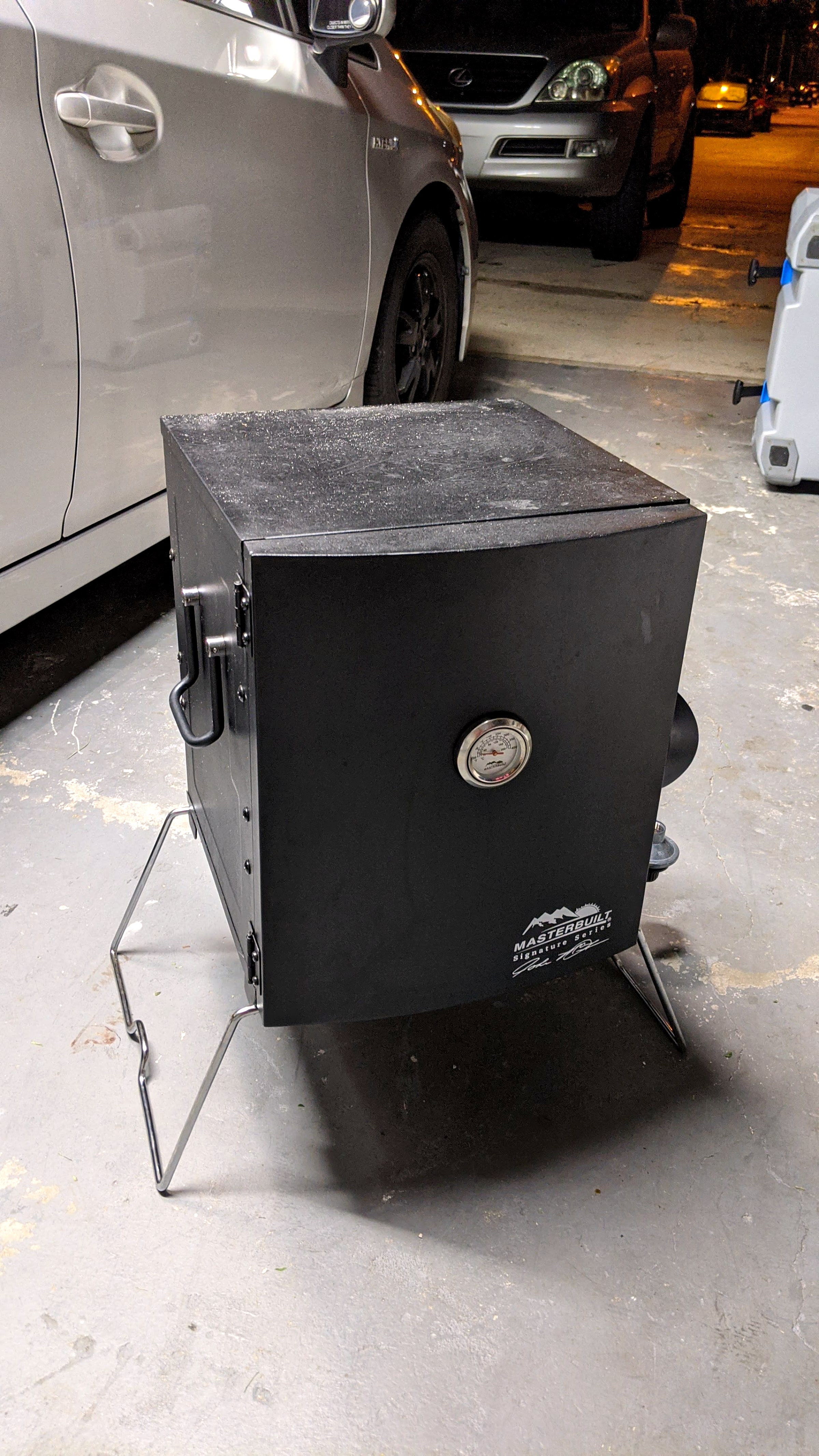
The Masterbuilt smoker. Not an every-trip item, but worth hauling for a longer stay.
If you're deciding whether a portable smoker is worth the trunk space, the honest answer is: only if smoking food is something you'd do anyway. It's a heavier, bulkier piece of gear than a stove, and it doesn't replace one. It's an addition for trips where you have the room and the time.
The RV kitchen: convenience with limits
Cooking in a rented RV galley is a different experience entirely: a real stovetop, real counter space, and none of the setup or breakdown of an outdoor stove. We've made stovetop coffee with a moka pot in an RV kitchen the same way we would at a campsite table, minus the wind and the bugs.
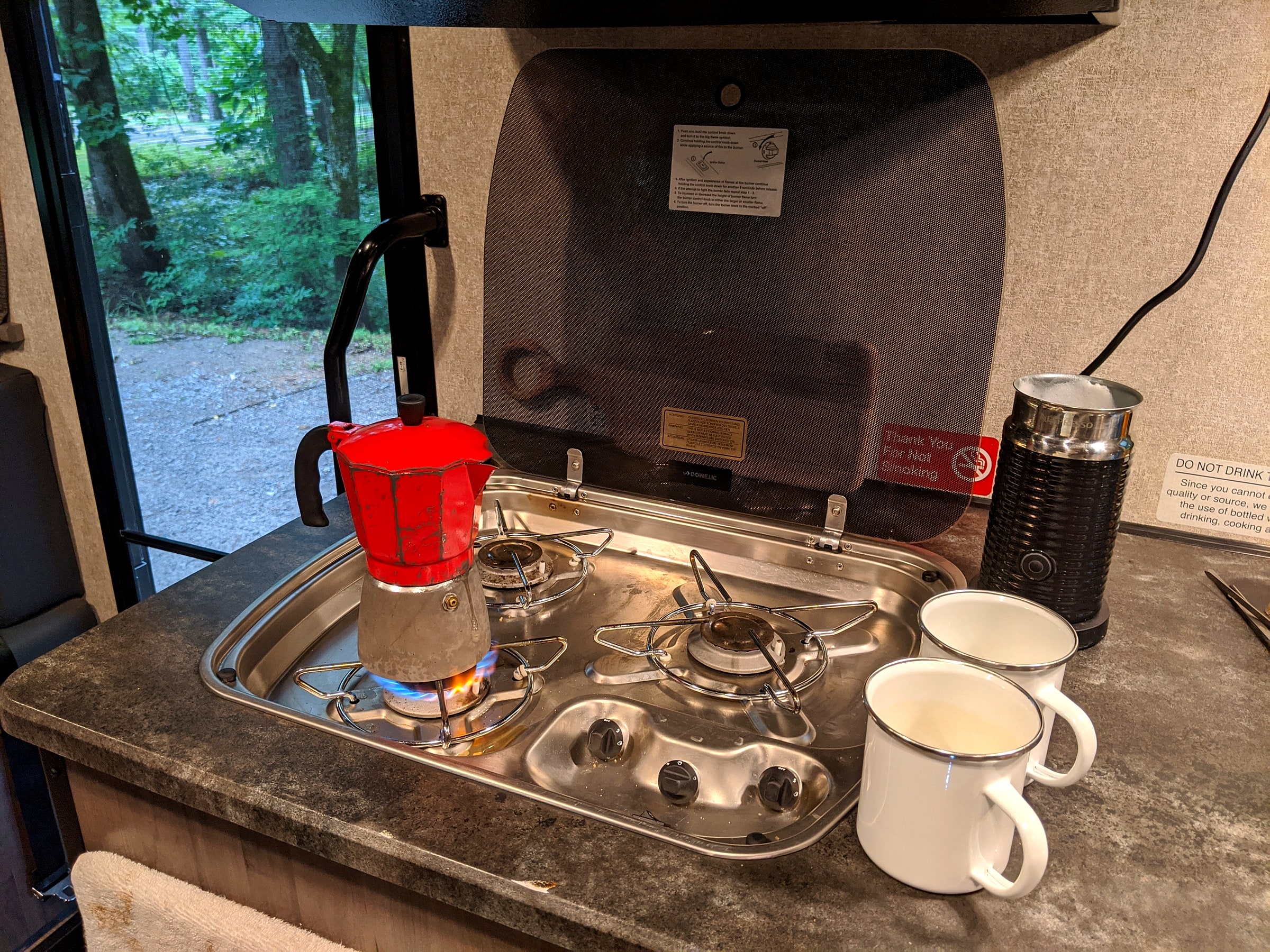
The limits show up fast, though. RV galleys are small, storage is tight, and anything that needs real prep space competes with everything else already sitting on the counter. It's the most convenient option on this list and also the one where you'll bump elbows the most.
Cooking over an open fire, wherever you are
Not every meal needs a stove, a smoker, or a kitchen. A samovar over an open fire, the setup pictured above from a trip through Kazakhstan, is about as simple as outdoor cooking gets: water, fire, and a kettle. It's worth remembering that the fanciest gear on this list isn't a requirement for a good meal outdoors, just an option.
Matching the method to the trip
- Quick, reliable meals. A propane stove, covered in our other post on camp stoves and fuel.
- Slow-cooked dishes on a budget. A wood-fired rocket stove, if you're willing to tend it.
- A real cooking project on a longer trip. A portable smoker, if you have the trunk space and the time.
- Convenience over character. An RV galley, if the trip includes one.
Track what each trip actually needs
The cooking gear that makes sense changes a lot depending on the trip. What you'd bring for a weekend with an RV kitchen looks nothing like what you'd bring for a backcountry stay with just a rocket stove. Build a checklist for your specific trip in Camper's Checklist so you're not packing smoker gear for a trip that only needs a moka pot.