
Camp Stoves for Camping: What We Use and How Much Propane to Actually Bring
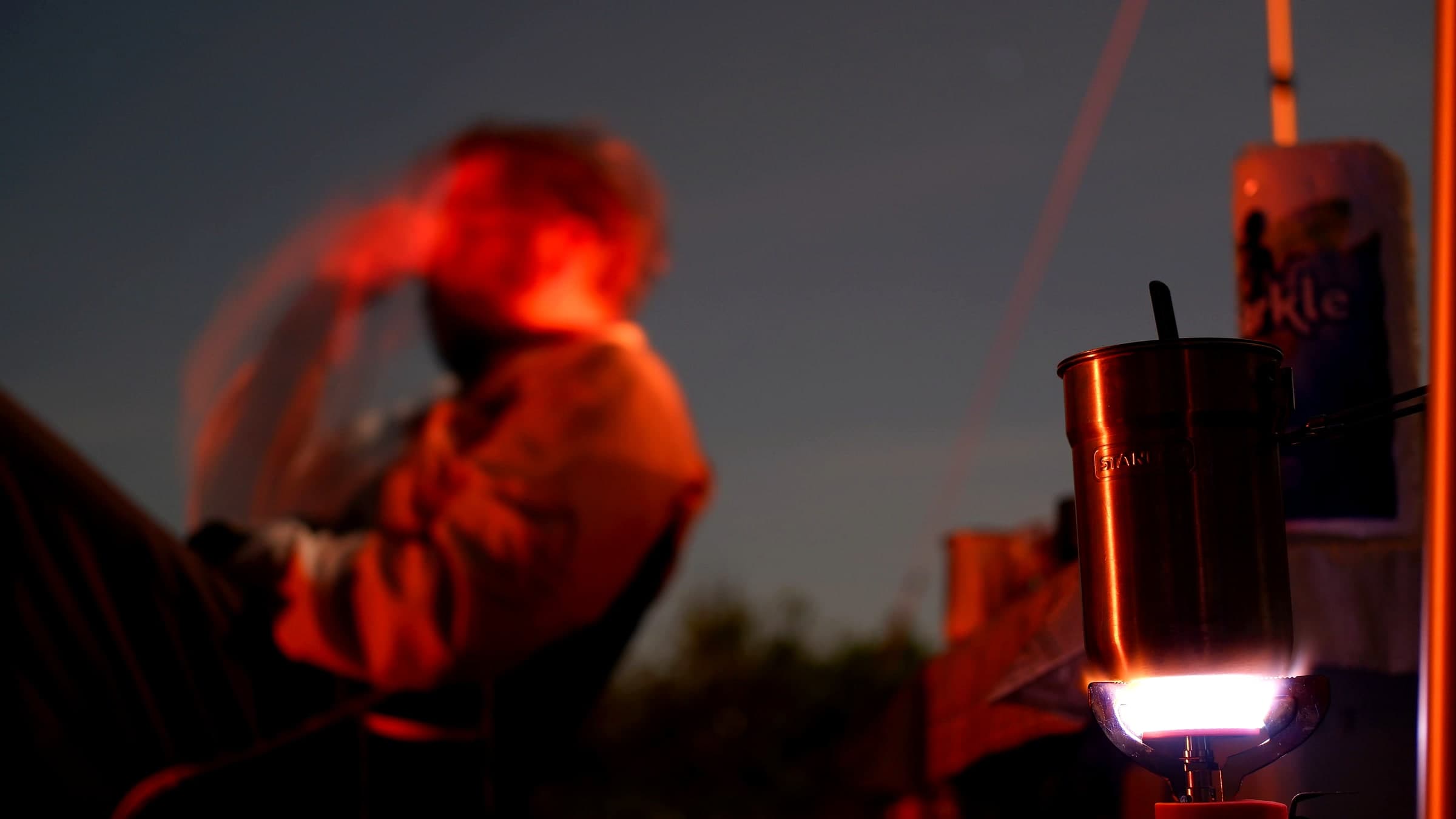
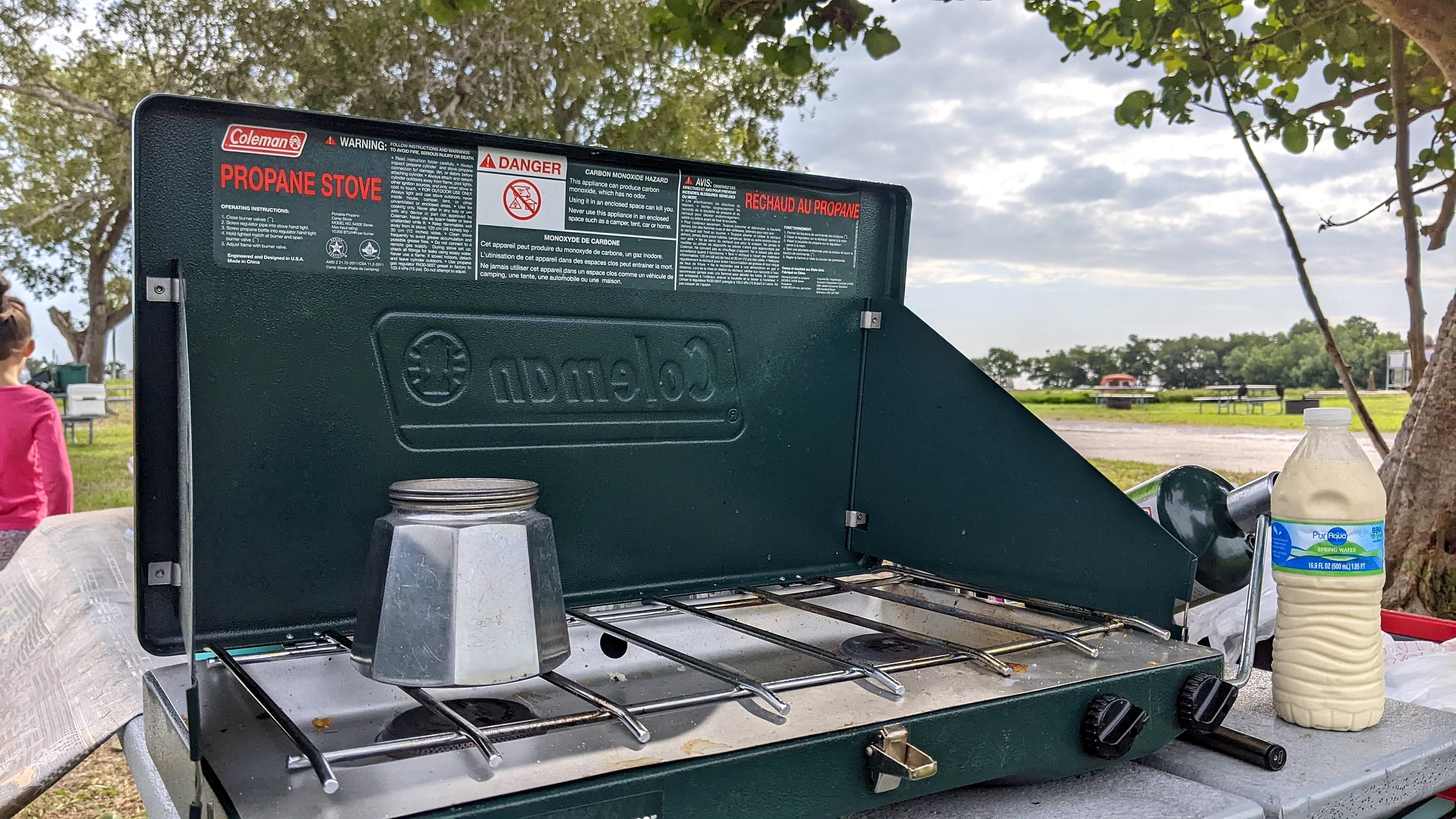
Our camp stove is a plain green Coleman two-burner propane stove, the kind most families who car camp have used at some point, and after years of trips we still haven't found a reason to replace it. It's not fancy. It lights every time, it holds a moka pot steady enough for actual coffee, and it's cooked everything from breakfast at a picnic table to dinner in the dark with nothing but the stove's own light to see by.
Why a two-burner propane stove instead of anything fancier
We've looked at canister-top backpacking stoves and multi-fuel setups, and for car camping they solve a problem we don't actually have. A two-burner propane stove gives us two things at once, coffee on one burner and eggs on the other, and it's stable enough on a picnic table that we've never worried about it tipping. Backpacking stoves are lighter and more compact, which matters when you're carrying everything on your back, but for a site you can drive or canoe to, that tradeoff isn't worth it for us.
How much propane to actually pack
This is the part people underestimate. The standard 1-pound propane canisters that fit a two-burner stove like ours run for roughly one to two hours of continuous burner time each, depending on how high you're running the flame. For a weekend trip with two people cooking three meals a day, two canisters has been enough for us with a little to spare. For anything longer than three or four nights, or if you're cooking for more people, we pack a third rather than run the risk of being down to simmer-only heat on the last morning.
A few things we've learned the hard way about propane specifically:
- Bring more than the math says you need. Cold mornings burn through propane faster than the manufacturer's estimate, and coffee before anyone's fully awake is not the moment to find out you're low.
- Check the connection before you're hungry. The screw-on regulator needs to be hand-tight, not wrench-tight. Over-tightening it is a more common failure than under-tightening.
- Never run it in an enclosed space. It sounds obvious written down, but it's worth saying because a cold, rainy night makes a screened tent or camper awning feel more enclosed than it is.
What actually gets cooked on it
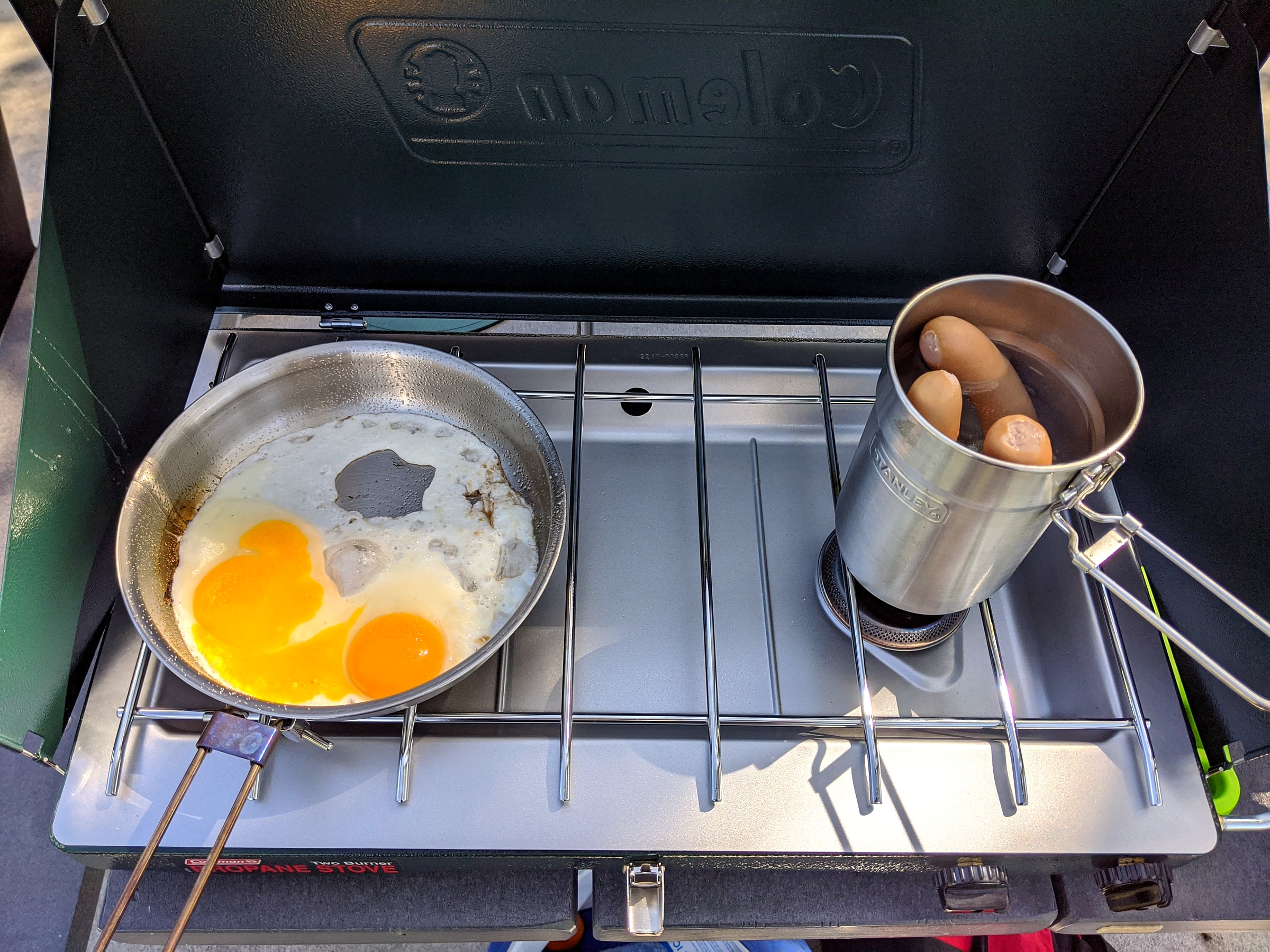
The stove earns its keep on the boring stuff more than anything elaborate: eggs, hot dogs, bacon, pancakes on a griddle pan set across both burners. The one non-obvious use that's become a permanent part of our setup is a stovetop moka pot for coffee. It sits directly on the grate the same as any pan would, and it makes genuinely good coffee in a way that instant packets never manage.
What we'd tell a first-time buyer
If you're deciding between a single-burner and a two-burner stove, go with two burners unless weight is genuinely the deciding factor. Cooking one thing at a time on a single burner gets old by the second trip. Beyond that, stick with a name-brand propane stove over anything unfamiliar. The failure point on cheap stoves is almost always the regulator, and that's not something you want to discover at a campsite.
Keep the fuel count on your checklist
Propane is the one item that's genuinely bad to run out of mid-trip, and it's easy to lose track of how many canisters are actually left in the bin between trips. Start a camping checklist in Camper's Checklist and you can track fuel counts the same way you'd track anything else on the list, instead of guessing on the way out the door.