
Portable Power for Camping (and Hurricane Season): Generators and Power Stations We Rely On
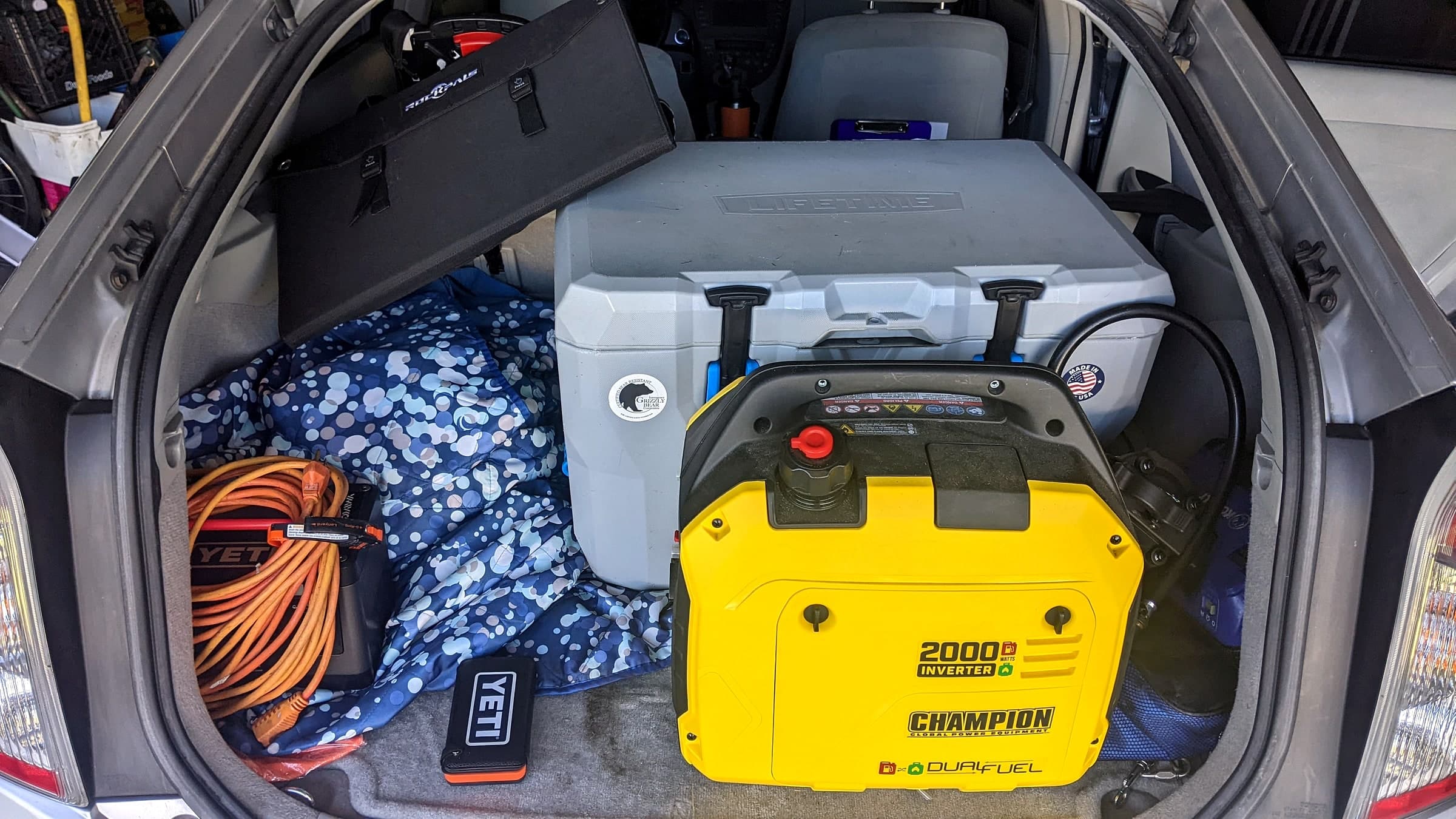
We bought a portable generator for camping. It's earned its keep more during hurricane season than on any actual trip, and that's not a complaint. It's the reason we'd tell any Florida camper to consider one even if they only camp a few times a year.
The Champion inverter generator
Ours is a Champion 2000-watt dual-fuel inverter generator, small enough to fit in a trunk alongside a cooler and the rest of a weekend's gear without dominating the whole space. Being an inverter model matters if you're running anything sensitive: phones, laptops, a CPAP machine, since inverter generators put out cleaner, more stable power than a standard generator does.
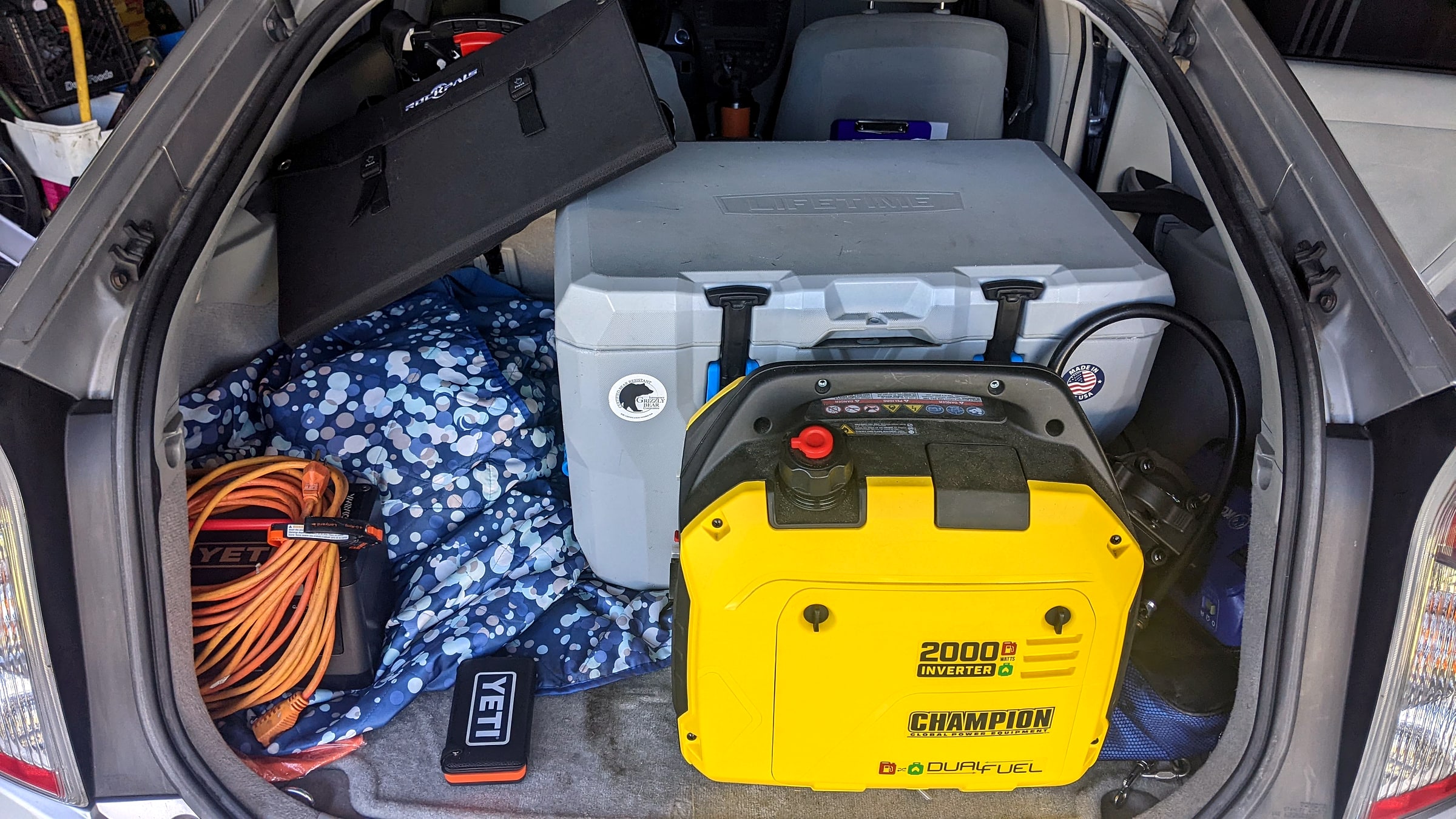
Dual-fuel is the other detail worth calling out. It runs on either gasoline or propane, which means it can share fuel with a propane camp stove on a trip, or run on gasoline when that's what's on hand during a storm. Having the option has mattered more than we expected when we bought it.
A portable power station for the smaller stuff
Alongside the generator, we run a smaller portable power station. No gasoline or propane involved, just a battery bank with real output that handles phones, lights, and small electronics without needing to run a generator for something that small. It's quieter, doesn't need fuel, and covers the everyday camping power needs that don't justify starting up the bigger unit.
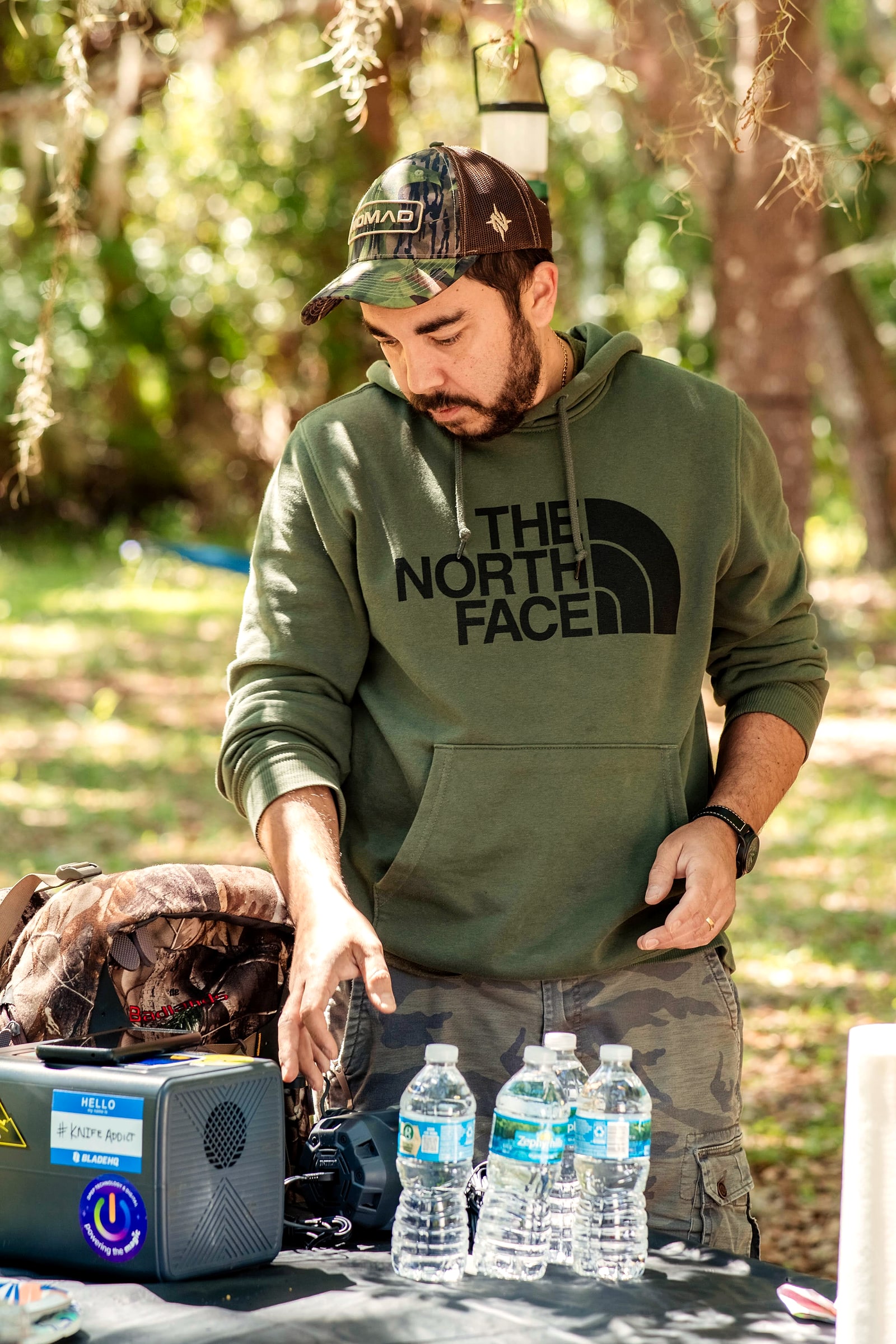
A portable power station at camp. Quieter and simpler than the generator for day-to-day charging.
The generator comes out for bigger draws: running a fan through a hot night, charging a power station itself, or backing up something that actually needs real wattage. For everything smaller, the power station alone does the job without the noise or the fuel.
Why this matters more in Florida than it sounds like it should
Hurricane season is the real reason we own both. When the power goes out for days instead of hours, a generator and a power station stop being camping gear and become the plan for keeping a fridge running, charging phones, and running a fan through a hot night with no air conditioning. We've used our camping generator for exactly this more times than we've used it on an actual trip.
That dual purpose is part of why we think it's worth the cost even for people who only camp occasionally. Gear that earns its keep twice a year during hurricane season and a few more times camping is an easier buy to justify than gear that only does one job.
What we'd tell someone buying their first one
- Get an inverter generator if you're running anything electronic. The power quality difference is real, not marketing.
- Dual-fuel is worth the extra cost if you already have propane around for a camp stove, or want flexibility during a fuel shortage after a storm.
- A smaller power station complements a generator, it doesn't replace it. Use the power station for daily charging and save the generator for real draws.
Power belongs on the checklist, not an afterthought
Fuel, extension cords, and charging cables are easy to forget precisely because they feel like backup items instead of core gear. Add your power setup to a shared checklist in Camper's Checklist so it's packed before you need it, whether that's at a campsite or ahead of a storm.