
Camping with Kids: The Gear That Actually Gets Used
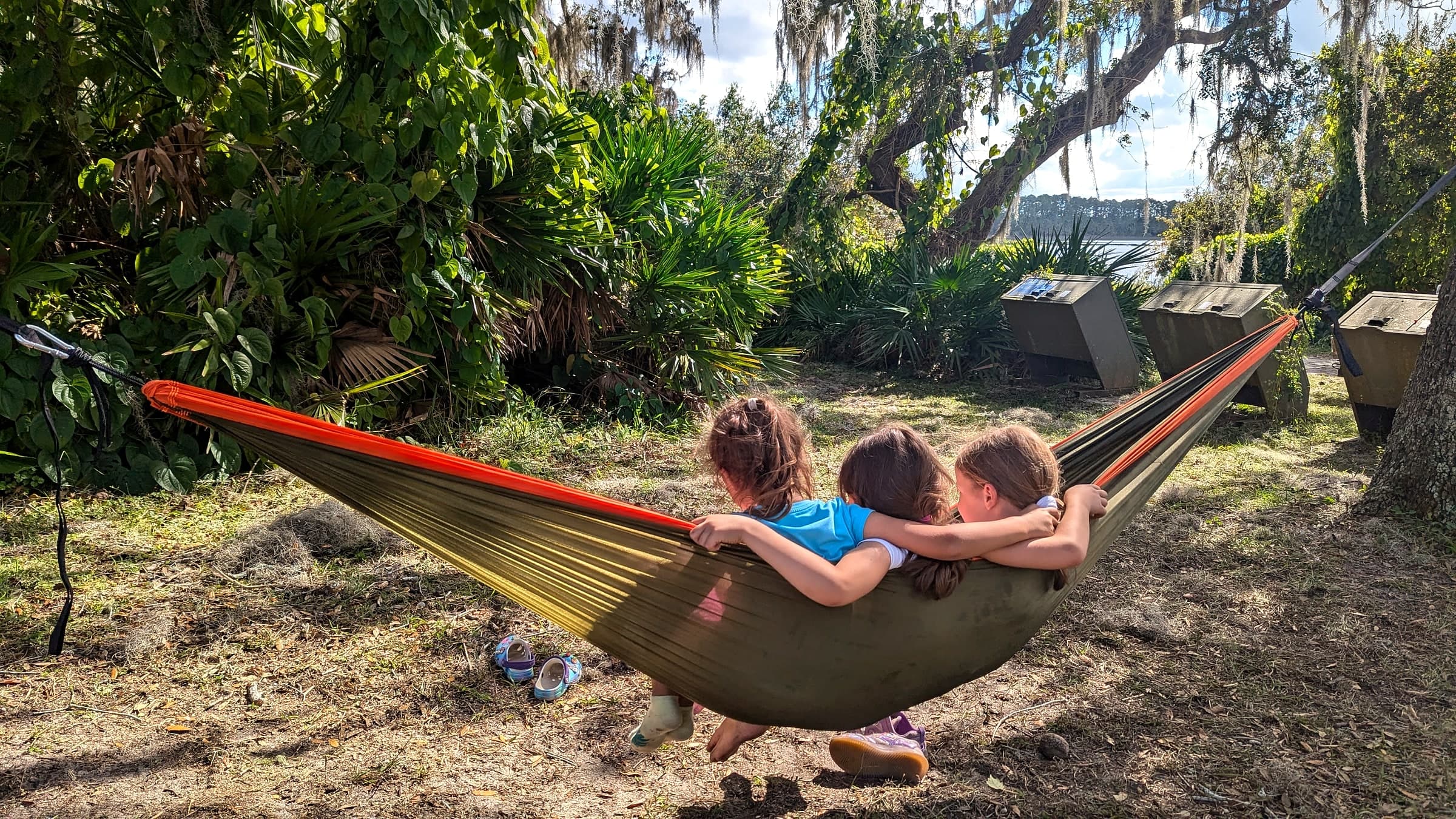
Every camping-with-kids packing list balloons fast once "just in case" items start piling in. The gear below is what actually earns its space in the car, sorted by what solves a real problem, not what looked fun in the outdoor store.
Sleep setup: this is the one to get right
A cold, uncomfortable kid at 2am is the fastest way to end a camping trip early. Kid-specific sleeping bags rated several degrees colder than the forecast (kids run colder than adults overnight, especially once they kick off a blanket) matter more than almost anything else on this list. A cheap foam pad under their bag also does more for comfort than most parents expect. The ground pulls heat out of a sleeping bag from underneath, not just the air temperature around it.
Light they can control themselves
A single lantern hung from the tent ceiling doesn't help a kid who wakes up at 3am needing the bathroom. A small headlamp or clip-on light per kid, one they've practiced turning on themselves before the trip, removes a whole category of nighttime meltdowns. It's a small item that punches well above its size.
No tablets, no phones, one exception
We don't do electronics on our trips. No tablets, no phones, nothing with a screen for the kids to disappear into. The one exception is a kid's smartwatch, which stays on their wrist the whole trip so we can track them or call them if they wander off or get separated from the group. Every once in a while they'll also have a phone on them, but it's a real dummy phone with nothing on it but a camera, just for taking pictures, not a device they can actually get lost in.
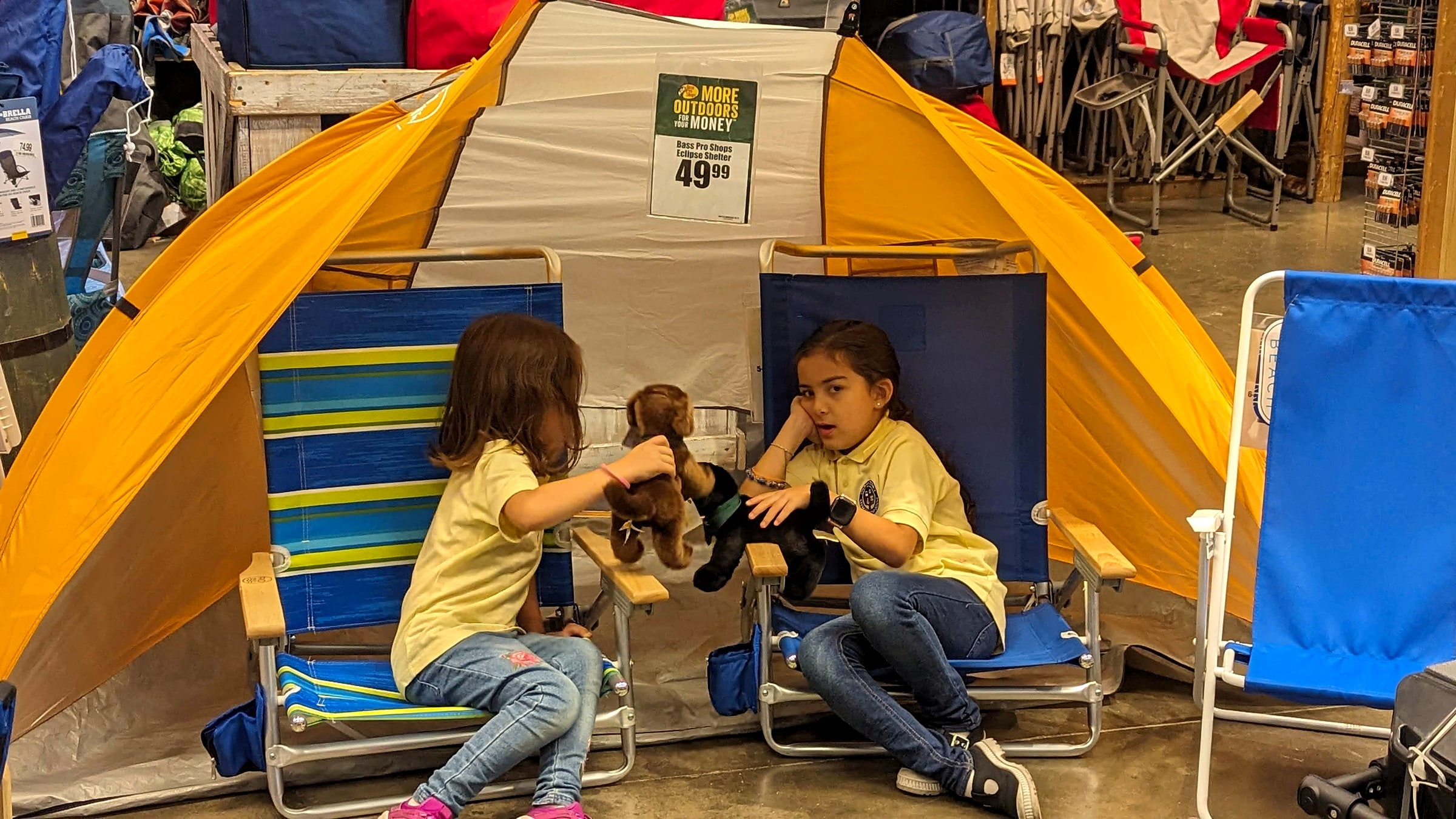
The smartwatch is the one piece of tech that comes on every trip. Everything else stays home.
Cutting screens out completely was less of a fight than we expected. Kids at a campsite have plenty to look at without one.
The hammock is the real entertainment budget
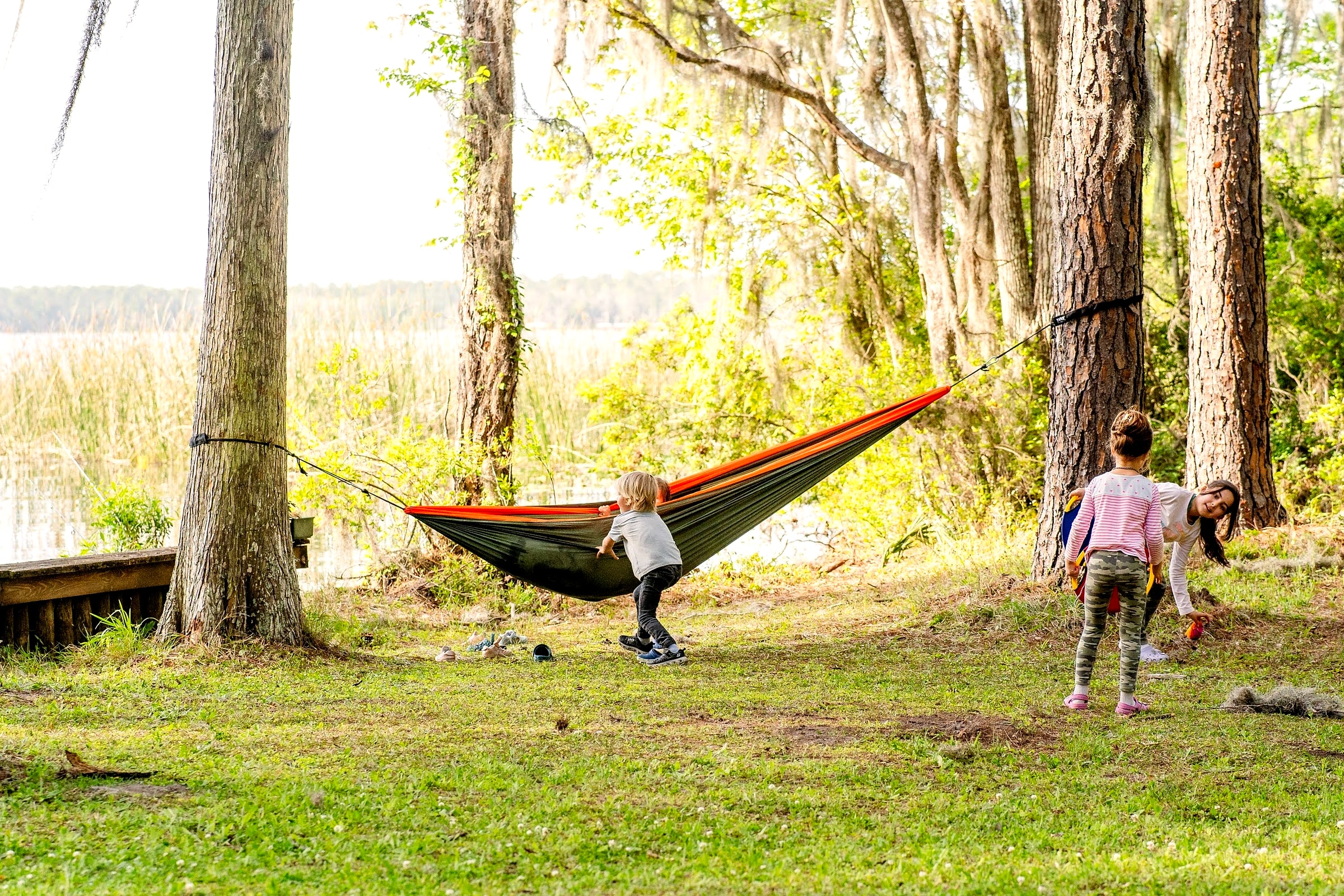
If we had to name the single piece of gear our kids use the most, it's not a toy, it's the hammock. It's the first thing they ask about setting up and usually the last thing they're pulled out of before bed. When we're camping with friends and there's a bigger group of kids, we hang at least two hammocks so nobody's stuck waiting for a turn.
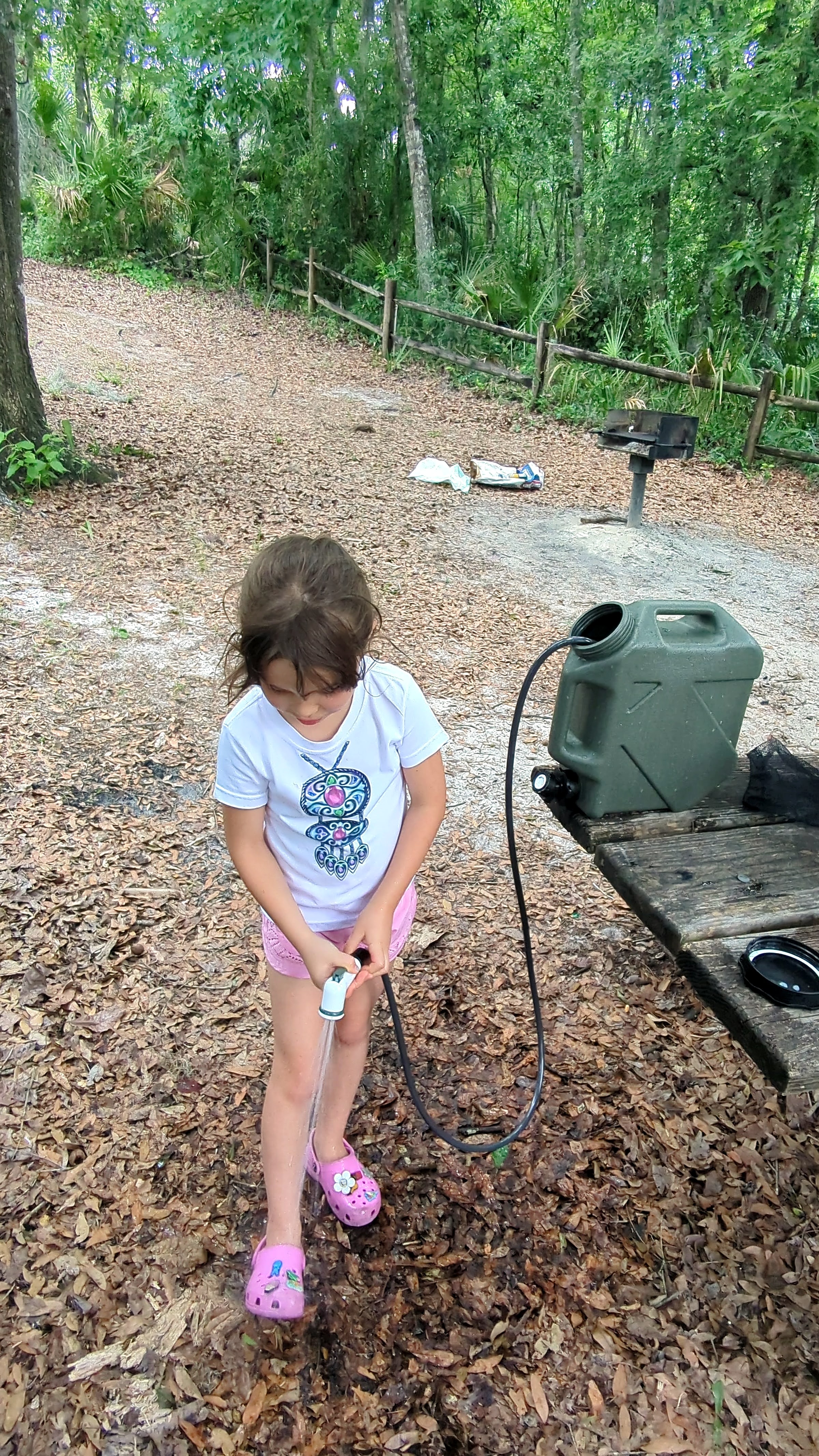
Three kids, one hammock. This is where most of a trip's downtime actually happens.
Beyond the hammock, kids do get pulled into real camp jobs: collecting dead, downed wood for the fire, and scavenging around the site looking for insects and animals. The rest of the time it's whatever they come up with themselves, hide-and-seek, a made-up game, chasing each other around the site. We stopped trying to plan their entertainment and started just letting the campsite do it.
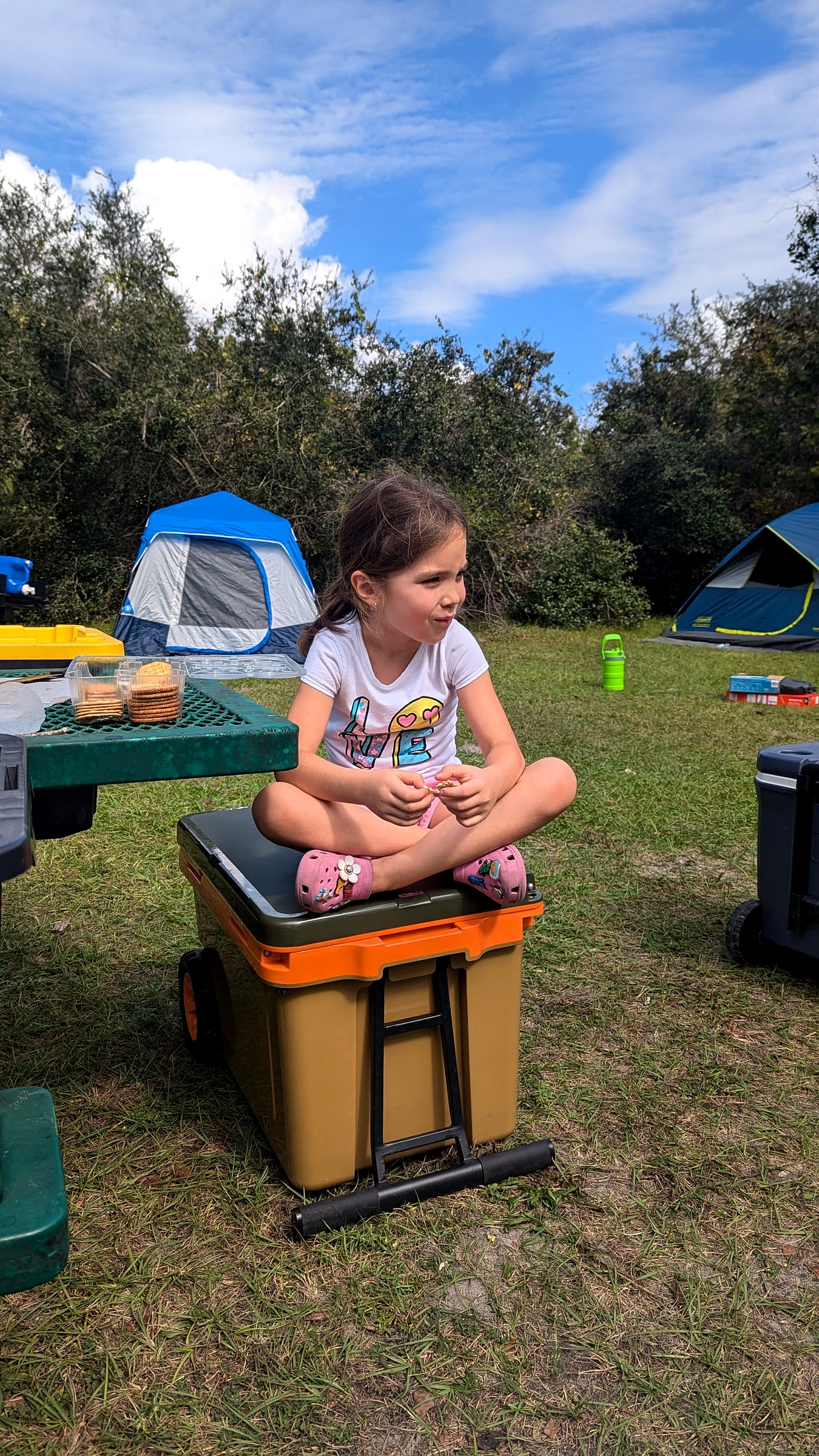
The hammock is usually the first thing they run for after we finish setting up.
Washing kids off without a shower
Not every campground has a shower, and a muddy, sticky kid still needs to get clean before bed either way. We use a portable pump sprayer connected to a water jug to rinse dirt off the kids at the end of the day. It's a small, cheap piece of gear, but it solves a problem that otherwise means a kid climbing into a sleeping bag covered in campfire soot and dirt.
The unglamorous gear that prevents the actual problems
- A portable potty or pee funnel for a kid who isn't comfortable with a pit toilet in the dark, which is a more common problem than most first-time camping parents expect.
- A full backup outfit within reach, not buried in a packed duffel. A wet or muddy kid needs a change fast, not after ten minutes of digging.
- Extra wipes and hand sanitizer in the tent itself, not just at the camp kitchen, for the middle-of-the-night incidents.
- A known-quantity snack kids will actually eat when they're overtired and picky, rather than testing a new camp food for the first time on the trip.
Match the gear to your actual kids
The right list depends heavily on ages: what a 3-year-old needs (a potty, constant supervision near any water or fire) is different from what a 9-year-old needs (their own light, their own small pack, more independence). Building the list around your specific trip and kids' ages, rather than a one-size-fits-all list, is what keeps the packing manageable instead of overwhelming.
Build a list your whole family can see
Camping with kids usually means more than one adult is packing and prepping, and a shared list beats texting each other "did you grab the headlamps?" from separate rooms. Start a checklist for camping with kids in Camper's Checklist, share it with the rest of your group, and everyone can check off their part before the trip instead of finding out what's missing at the campsite.