
RV Camping Checklist: What First-Timers Forget
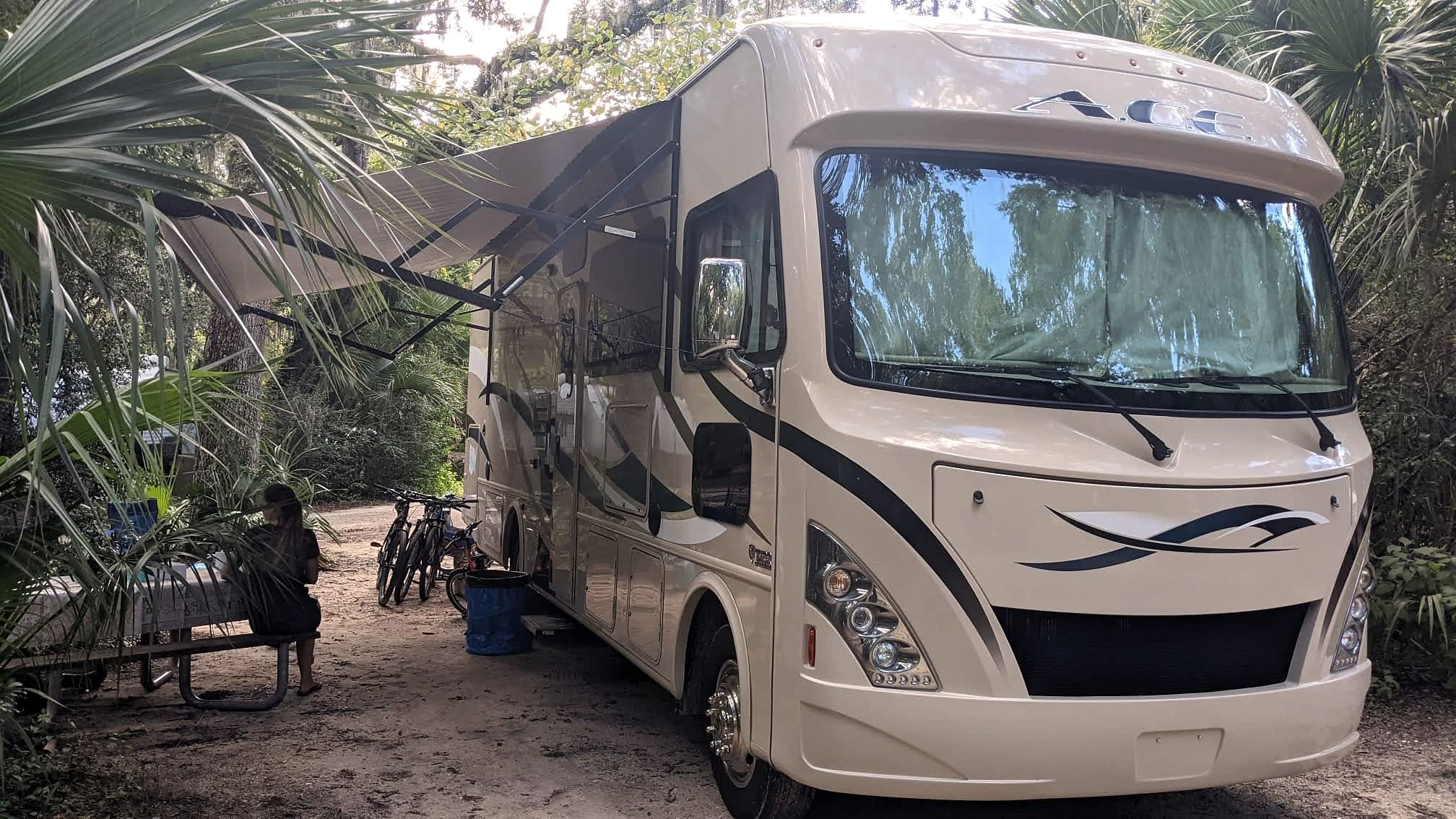
We've done a lot of RV camping over the years. Cruise America has been our go-to for renting a Class C motorhome, and we've also rented a pop-up trailer and a fifth-wheel to try different setups before committing to buying anything ourselves. This checklist is built from what we've actually packed and actually forgotten across all of it, not a generic list assembled from a spec sheet.
Hookups: bring your own adapters
Campground pedestals aren't standardized the way you'd hope. Bring a 30-to-50 amp (or 50-to-30) electrical adapter even if your RV "should" match the site's rating, a water pressure regulator so a campground's high line pressure doesn't blow a fitting inside your rig, and a food-grade drinking water hose that's separate from any hose you'd use for washing the RV. Mixing those up is a common first-timer mistake with an unpleasant consequence.
Leveling before anything else
An unlevel RV isn't just uncomfortable to sleep in. Refrigerators in many RVs rely on gravity for the cooling system to work properly, and running one unlevel for an extended stay can damage it. Leveling blocks and a small bubble level are cheap, pack flat, and should go on before you do anything else at a new site.
Black tank etiquette (and the one rule that matters)
Nothing marks a first-timer faster than dumping wrong. The rule that actually matters: always dump black (sewage) before gray (sink/shower) water. The gray water rinses residue out of your sewer hose on its way out. Keep the black tank valve closed between dumps so solids don't dry-stack inside the tank, and always use a clear sewer hose elbow at the connection so you can actually see when the tank is empty instead of guessing.
What's included has changed, so pack like it isn't
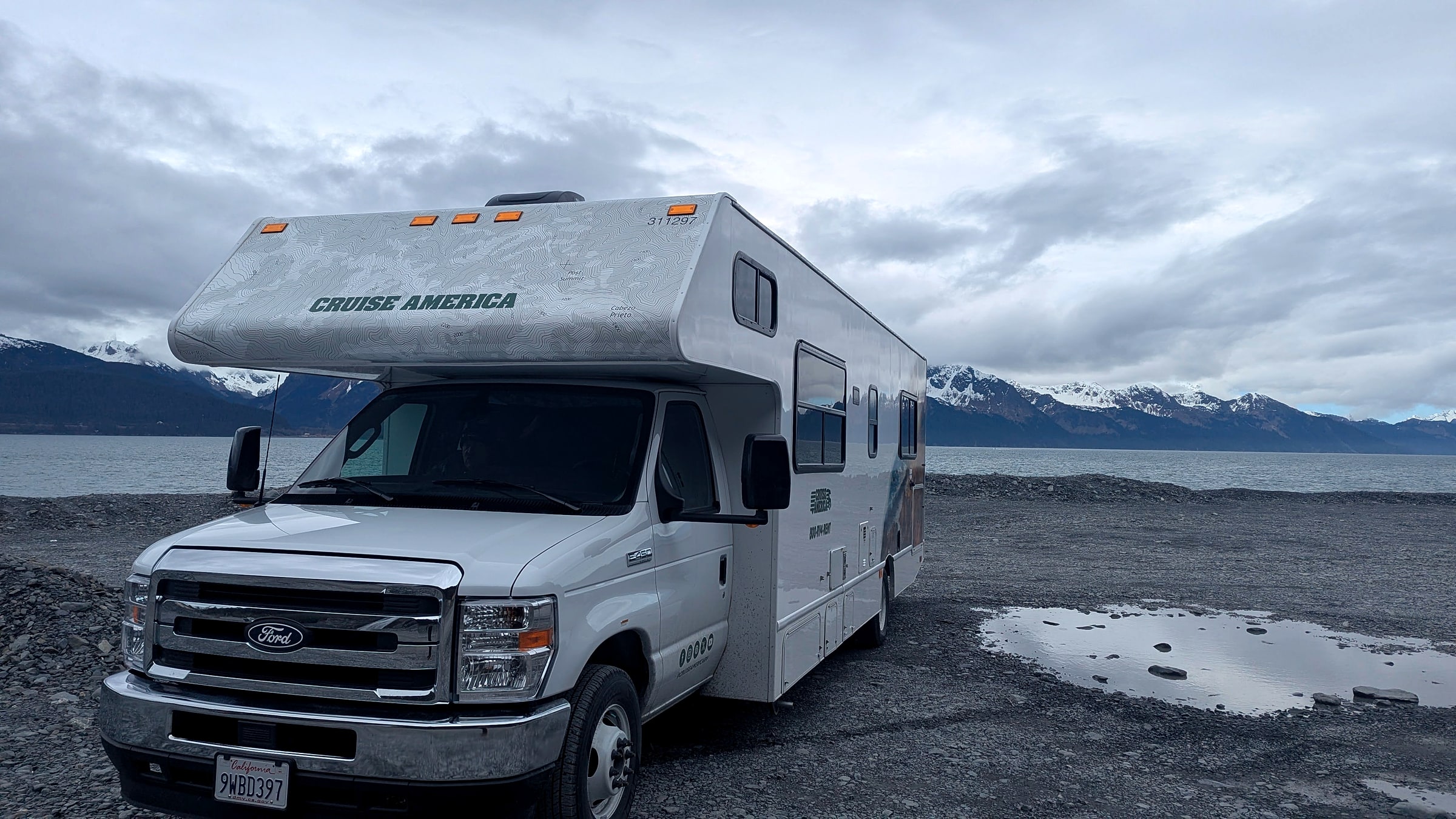
We used to be able to count on linens, dishes, and silverware coming standard with most Cruise America rentals. That's changed over the years, especially noticeable on our most recent trip, a Cruise America rental in Alaska in 2026, where none of that was automatically included the way it used to be. Some core items are still worth packing every single time regardless of what a rental promises:
- A collapsible trash can. Almost nothing kills a campsite faster than not having a dedicated place for trash, and a collapsible one takes up almost no room when it's not in use.
- A flashlight, a camping axe, and a camp knife. Basic tools for anything that comes up around the site, from splitting kindling to opening a stubborn package.
- A lantern for actual camp light, not just the RV's interior lighting.
- A headlamp. We consider this a must, not a nice-to-have, for anyone who needs to walk to a bathhouse or deal with hookups after dark.
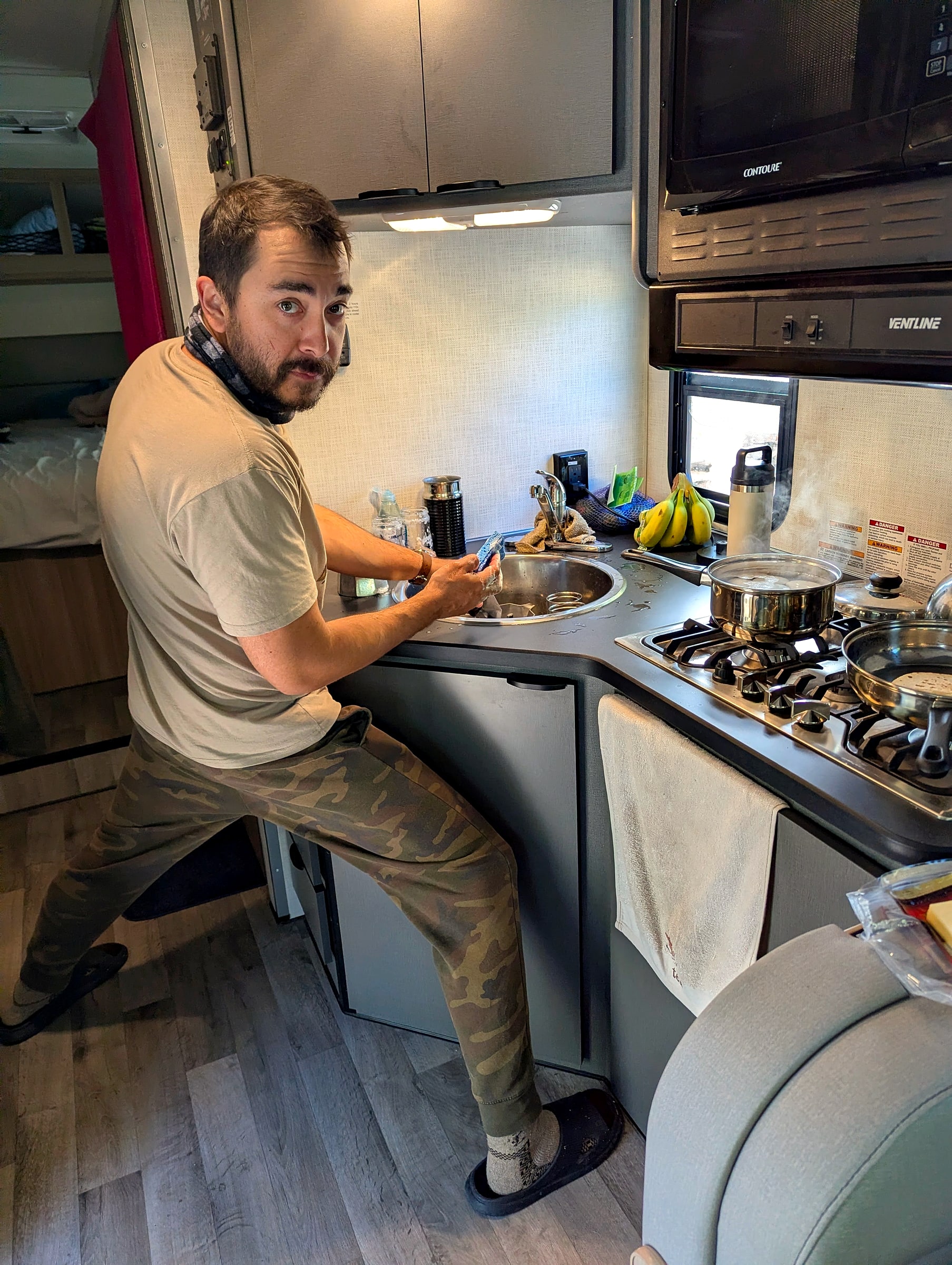
Doing our own dishes on the Alaska trip. Bring your own dish soap and sponge either way.
Consider a peer-to-peer rental
Renting through RVshare, Outdoorsy, or a similar peer-to-peer site is usually a better value than it looks on paper. Yes, it can cost more money upfront than a Cruise America rental, but you typically get a lot more amenities included, and owners will often offer to tow the rig to the campsite for you. That's a genuinely convenient option if you don't have a hauling rig of your own but still want to try the RV lifestyle before buying into it.
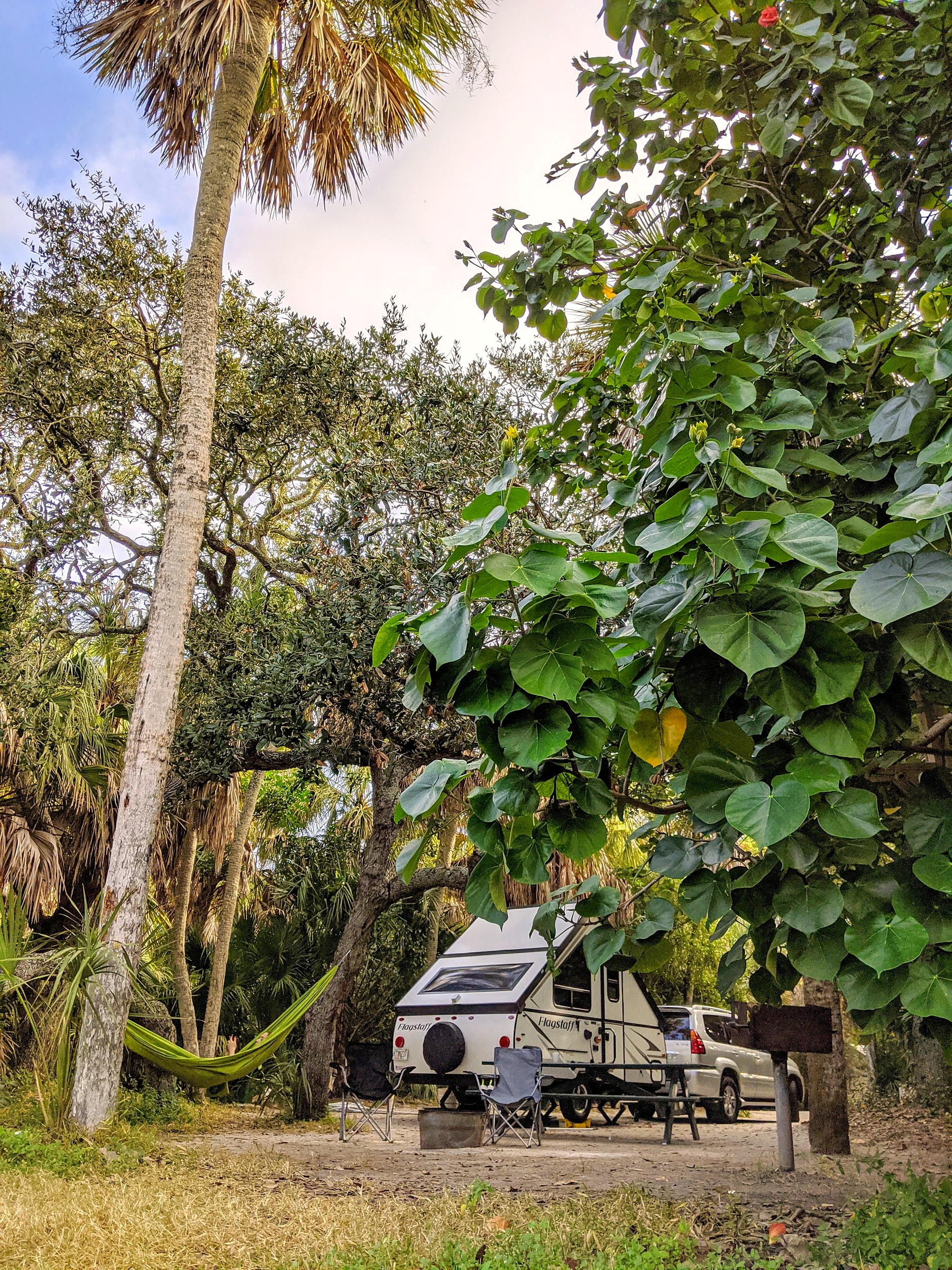
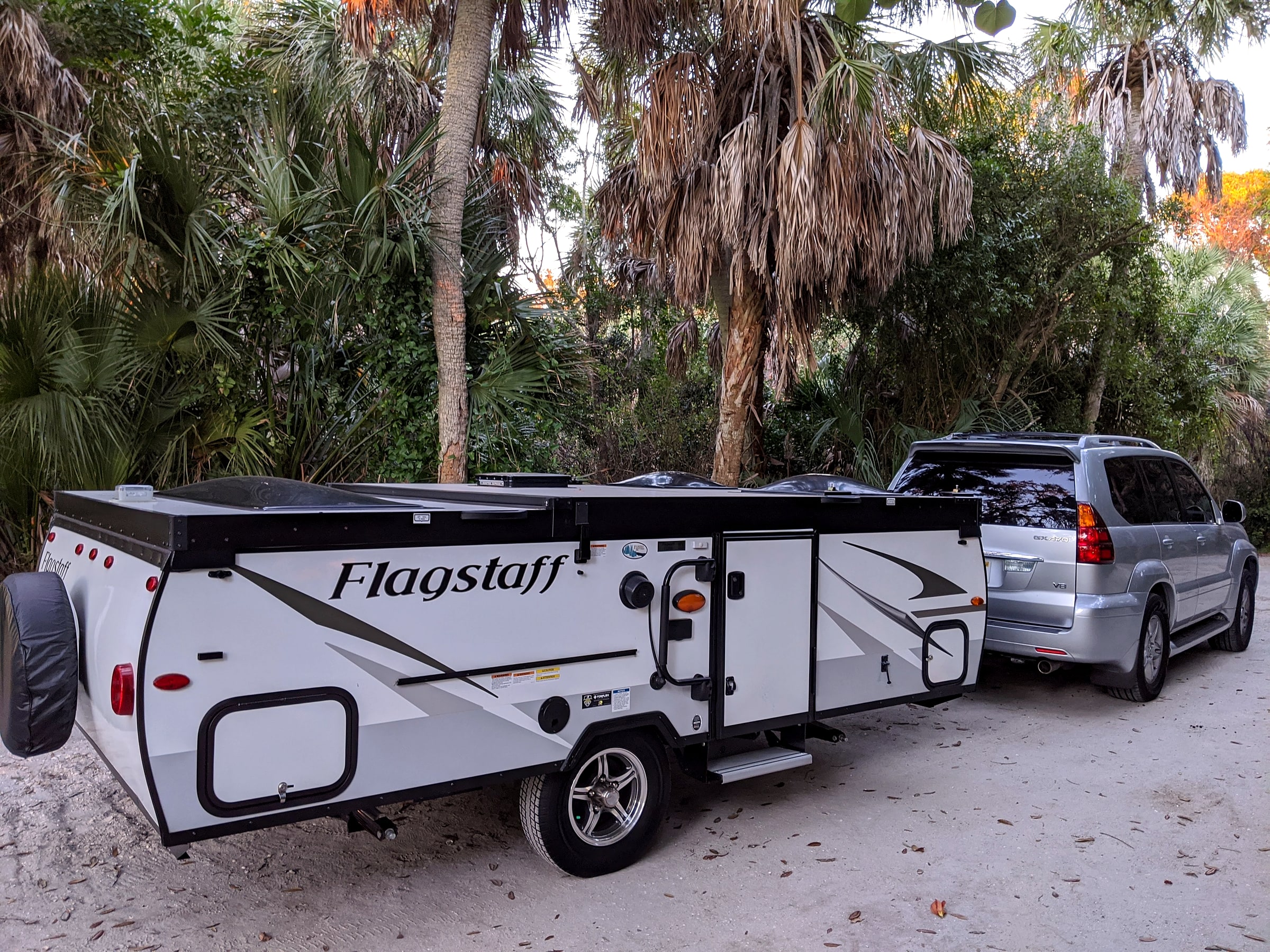
Our rented Flagstaff pop-up trailer, set up for the weekend under a canopy of palms.
If you go the peer-to-peer route with a towable trailer, we'd also recommend picking up an extension RV cord. Site setups vary a lot more than you'd expect, and a short factory cord that's fine at one campground can leave you unable to reach the pedestal at another.
The gear rookies always forget
- Wheel chocks, set before you level, so the rig can't roll while you're adjusting blocks underneath it.
- A dedicated set of tools for setup and teardown kept in one bin, so you're not searching the whole rig for a wrench at a dark campsite.
- A surge protector for the electrical hookup. Campground power isn't always clean, and a $40 surge protector is cheap insurance against a damaged converter or appliance.
- Disposable gloves for handling hookups and dirty water. You do not want to touch a sewer connection bare-handed even once.
- A portable, battery-powered CO2 sensor. Many RVs already have one built in, but we bring our own regardless, since it's cheap insurance and doesn't depend on the rental's unit actually working.
- A jump starter, in case the RV doesn't start after sitting a few days at a site.
- Camping chairs. These usually cost extra to add to a rental, and packing your own is often cheaper than the rental add-on fee.
- A small portable vacuum or broom. A lot of RVs already have a broom on board by default, but it's worth checking before you assume you won't need to bring one.
- Paper campground map or printed reservation confirmation. Cell service at many campgrounds, especially the nicer, more remote ones, is unreliable exactly when you need to find your site.
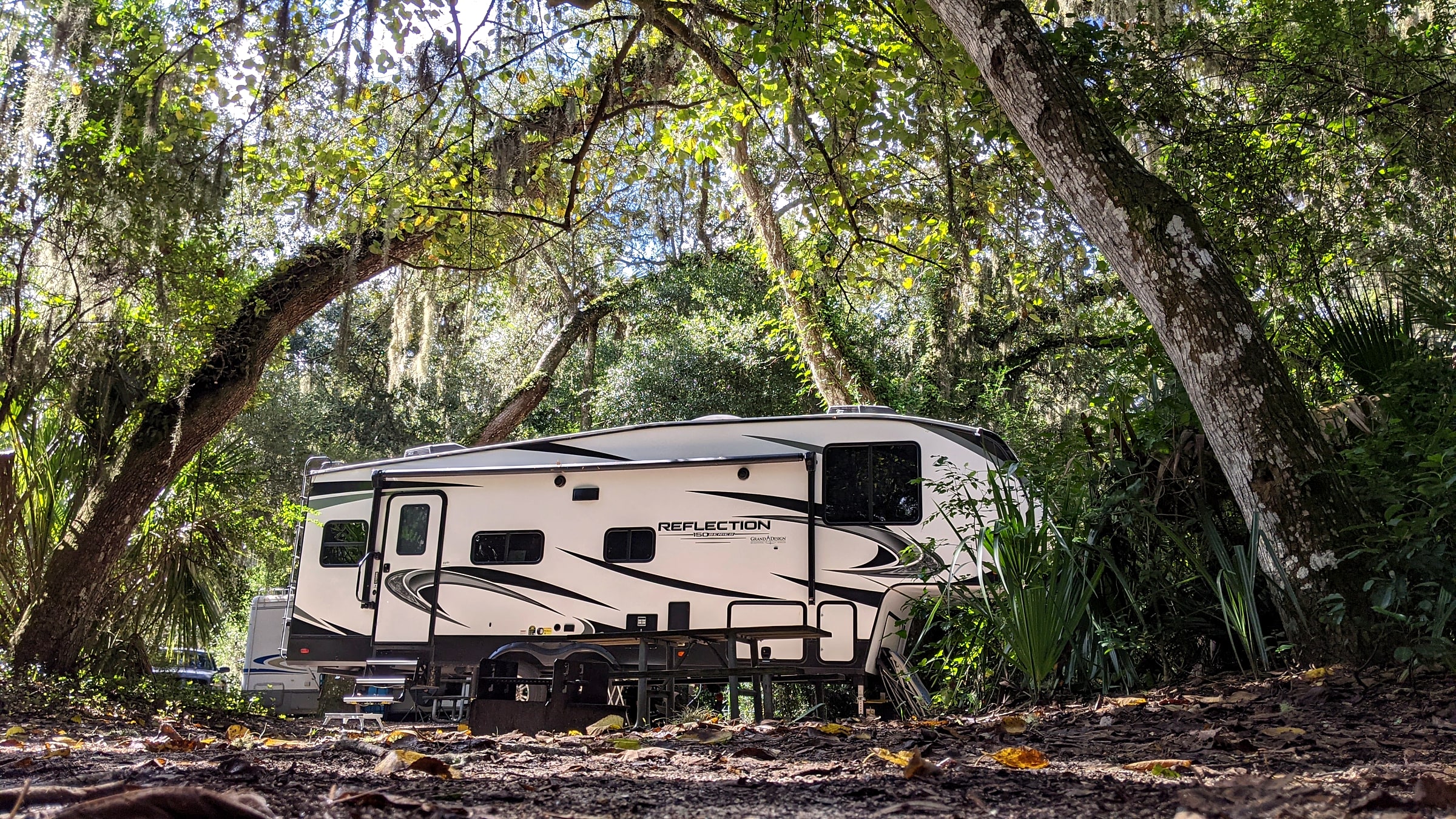
Practice at home first
The single best thing a first-time RVer can do is a full dry run in the driveway: extend slides, hook up water and a hose to a spigot, run the leveling process, and practice backing into a marked space. Doing all of that for the first time at a crowded campground, with an audience, is a stressful way to learn, and it's how leveling blocks and hose fittings get left behind in the panic of getting set up before dark.
Skip the guesswork on your next trip
RV-specific gear doesn't overlap much with tent camping gear, so a generic packing list either misses half of what you need or buries it under irrelevant items. Start an RV checklist in Camper's Checklist and it'll surface the hookup, leveling, and tank-management gear specific to RV camping instead of making you cross-reference a tent-camping list against your rig.