
Our Backcountry Sleep System: A Poncho Liner, an Inflatable Pad, and a Packable Pillow
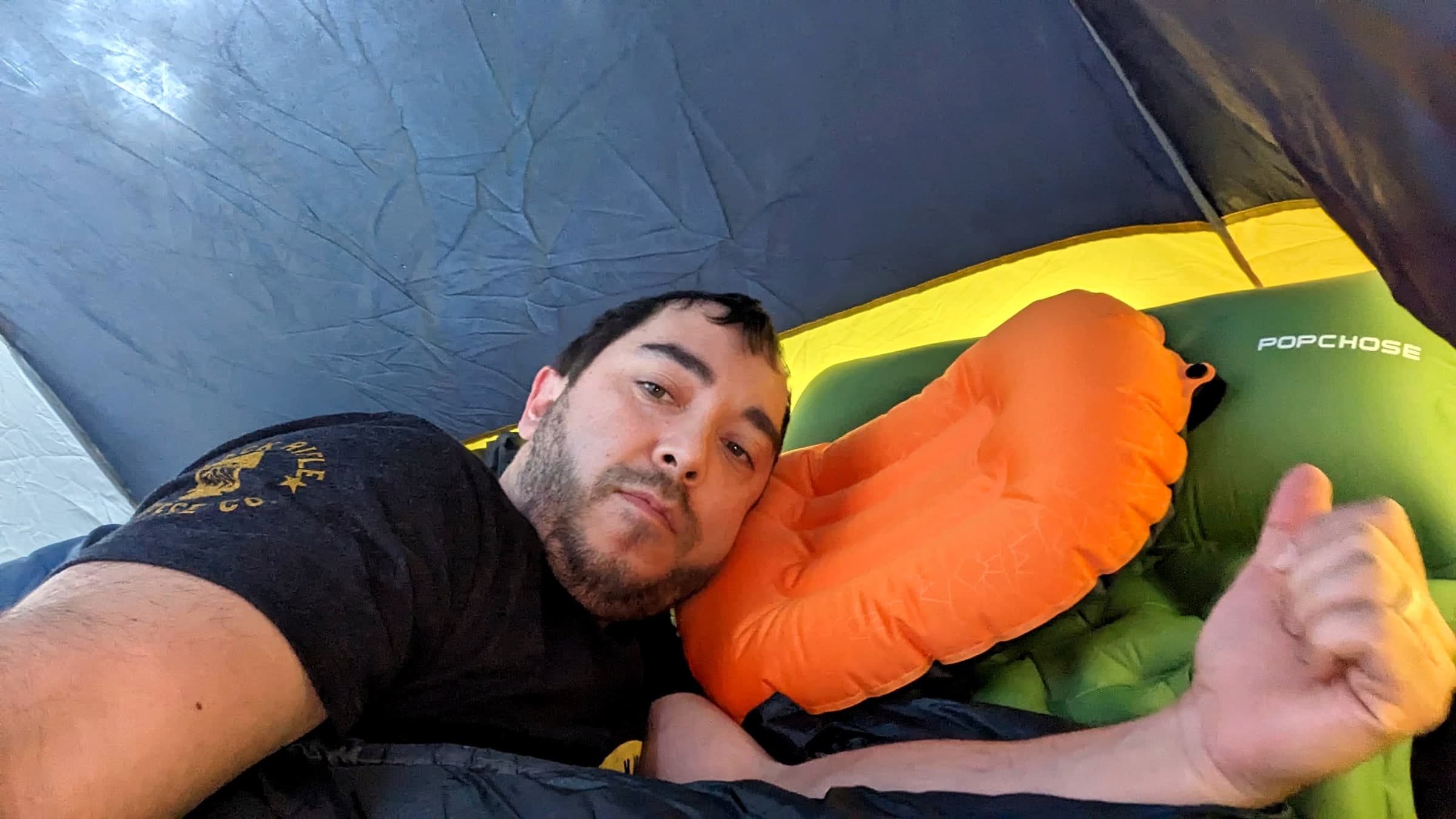
Car camping sleep gear and backcountry sleep gear are not the same category, even though it's tempting to treat them that way the first time you're packing for a trip you can't drive to. Everything in a backcountry sleep setup has to earn its space and weight, which is how we ended up with a much smaller, much more deliberate kit than what rides in the car for a normal weekend.
The poncho liner: one item doing five jobs
The centerpiece of the setup is a Helikon-Tex Swagman Roll, a bushcraft poncho liner that's built to work as five different things depending on how it's folded: a poncho liner, a summer sleeping bag, an inner liner for a modular sleep system, a plain blanket, or a hammock underquilt. We don't use all five functions on every trip, but having one piece of gear that can cover whichever one we actually need has meant leaving other, single-purpose items at home.
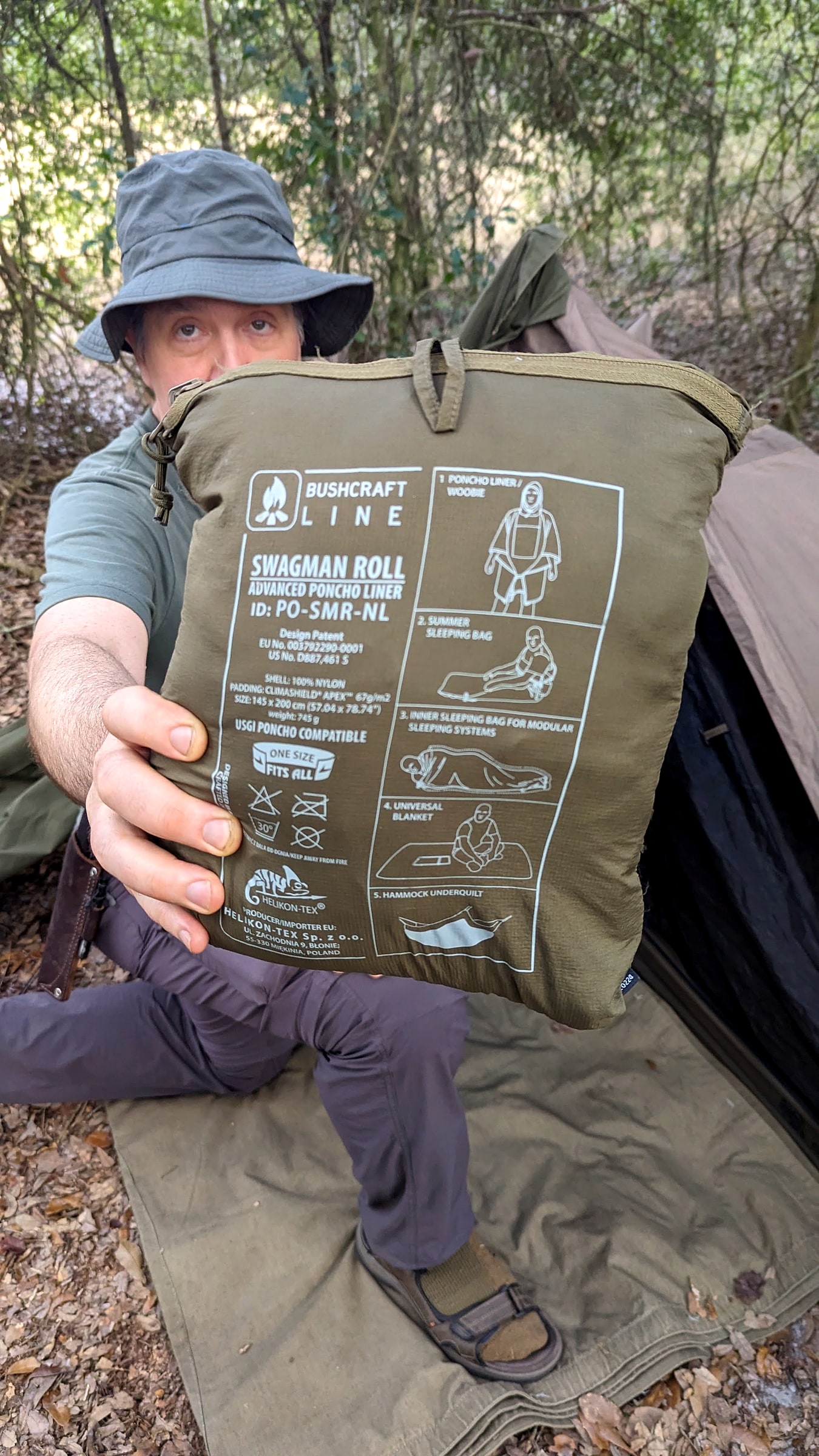
The Swagman Roll poncho liner. One item, several jobs, depending on how it's folded.
It's not a replacement for a proper cold-weather sleeping bag. On a warm enough night, or layered with something else, it's done the job well. On a genuinely cold night, it's a liner, not the whole solution.
An inflatable pad matters more than people expect
The ground pulls heat out of a sleeping bag or liner faster than most people account for, and a foam pad only does so much about it. We switched to an inflatable sleeping pad specifically for backcountry trips because it packs down to a fraction of the size of a foam pad while insulating better, a real tradeoff win for anything you're carrying in yourself.
The one thing we'd tell anyone switching to an inflatable pad for the first time: test it at home before the trip. A slow leak is an annoying problem in a backyard and a genuinely bad night's sleep on night one of a backcountry trip.
A small inflatable pillow, because comfort still matters
It's easy to assume a pillow is the first thing to cut when you're packing light, but a small inflatable travel pillow weighs almost nothing and packs down to the size of a fist. Leaving it home to save an ounce hasn't been worth the tradeoff in actual sleep quality on trips where we've tried it.
What we'd tell someone building this kit from scratch
- Start with the pad, not the bag. Insulation from the ground affects sleep quality more than most people expect, and it's the piece that's easiest to underbuy.
- A multi-use liner beats a single-purpose one for trips across different seasons. You're not buying and packing a separate item for every temperature range.
- Test everything inflatable before the trip, not during it.
Pack it with the rest of the backcountry list
Sleep gear is only part of what a backcountry trip actually needs, and it's the category most worth double-checking before you're somewhere you can't just drive back for a forgotten item. Build a backcountry checklist in Camper's Checklist to keep sleep gear, food, and everything else in one place before you go.